Construction Chemicals Overview: Key Products, Properties & Industry Uses
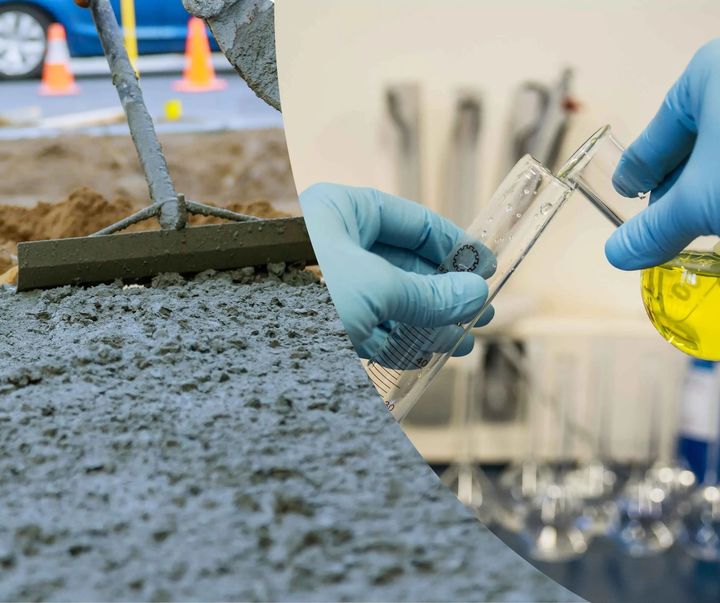
Construction chemicals are specialized materials added to concrete, cement, mortar, coatings, sealants, adhesives, and other building systems to modify their properties or support specific construction applications.
The broad category includes construction chemical products such as concrete admixtures, cement additives, waterproofing chemicals, construction sealants, construction adhesives, repair compounds, grouts, coatings, and curing materials.
The development of construction chemicals is closely connected with the evolution of modern concrete and building methods. Traditional cement and concrete mixtures could provide structural strength, but changing weather, moisture, chemical exposure, temperature variation, and demanding construction schedules created the need for materials with more controlled characteristics.
Today, construction chemical suppliers and construction chemical manufacturers produce formulations for residential buildings, commercial structures, roads, bridges, tunnels, factories, warehouses, water infrastructure, and other projects. Specialty construction chemicals can be formulated to influence setting time, workability, water resistance, adhesion, durability, surface protection, or repair performance.
Construction chemicals can generally be grouped according to their purpose. Concrete admixtures and concrete additives modify fresh or hardened concrete, while waterproofing materials help control water penetration. Construction sealants and adhesives are used for joints and bonding, while concrete repair chemicals address damaged or deteriorated surfaces.
| Construction chemical category | Main purpose | Common applications |
|---|---|---|
| Concrete admixtures | Modify concrete properties | Foundations, slabs, bridges |
| Cement additives | Adjust cement performance | Cement production and mortar |
| Waterproofing chemicals | Reduce water penetration | Roofs, basements, tanks |
| Construction sealants | Seal joints and gaps | Buildings and infrastructure |
| Construction adhesives | Bond materials | Flooring, panels, assemblies |
| Repair chemicals | Restore damaged surfaces | Concrete structures |
| Construction grouts | Fill gaps and voids | Anchors, machinery, masonry |
| Epoxy coatings | Protect concrete surfaces | Industrial floors |
| Curing compounds | Support concrete curing | Slabs, pavements, precast units |
Importance
Construction chemicals matter because buildings and infrastructure are exposed to conditions that can gradually affect materials. Water, freeze-thaw cycles, chemicals, abrasion, temperature changes, loading, and poor drainage can contribute to cracking, corrosion, surface deterioration, or loss of performance.
Concrete chemicals can help address some of these conditions when they are correctly selected and incorporated into an appropriate construction system. For example, concrete admixtures may improve workability or control setting characteristics, while construction waterproofing systems can help limit moisture movement through selected surfaces.
Supporting concrete performance
Concrete admixture suppliers and concrete admixture manufacturers commonly produce materials designed for specific concrete requirements. Depending on their formulation, admixtures may influence water demand, setting time, air content, flow, or early-age behavior.
Advanced concrete admixtures and high performance concrete additives are increasingly relevant in infrastructure where concrete must meet particular performance specifications. The suitability of an admixture depends on factors such as cement type, aggregate characteristics, temperature, water content, mixing procedures, and project specifications.
Managing moisture
Water is one of the most common environmental factors affecting construction materials. Waterproofing chemicals, waterproofing materials, and concrete waterproofing systems are used in areas such as foundations, basements, roofs, bathrooms, retaining structures, tunnels, and water-containing structures.
Different waterproofing solutions work through different mechanisms. Some create a surface barrier, while others are incorporated into cementitious systems or applied as membranes. The selection depends on the location, expected water pressure, substrate condition, movement, and exposure.
Maintaining and repairing structures
Concrete repair products and structural repair chemicals are used when concrete develops cracks, spalling, voids, or other forms of deterioration. Repair systems can include cementitious materials, polymer-modified compounds, epoxy materials, and other specialized formulations.
Concrete protection chemicals also have a role in reducing exposure to moisture, chemicals, abrasion, or other environmental influences. The purpose is generally to support the intended service life of a structure through appropriate material selection and maintenance practices.
Recent Updates
From 2024 through 2026, the construction chemicals field has increasingly been influenced by environmental reporting, chemical safety requirements, material transparency, and interest in lower-embodied-carbon construction.
Lower-carbon construction materials
The U.S. Environmental Protection Agency has been developing its Construction Material Opportunities to Reduce Emissions program, including work on Environmental Product Declarations and criteria for reporting environmental impacts. Concrete and cement-related materials are among the areas receiving attention.
This trend can affect construction chemical formulation because admixtures, additives, coatings, and related materials may increasingly be evaluated as components of broader construction systems. Product information, manufacturing data, and environmental documentation can therefore become more relevant to project specifications.
More attention to chemical safety
Chemical safety requirements also continue to influence construction chemical manufacturers and industrial construction chemicals users. In the United States, the Environmental Protection Agency administers the Toxic Substances Control Act, which covers the evaluation and regulation of chemical substances. EPA continues to update chemical risk-management activities and new-chemical requirements.
OSHA also updated its Hazard Communication Standard in 2024 to align more closely with the Globally Harmonized System. The changes address hazard classification, labels, Safety Data Sheets, and workplace communication. Further technical corrections were issued during 2024 and 2026.
Development of specialty formulations
Another general trend is the development of specialty construction chemicals designed for more specific applications. These include polyurethane construction chemicals, construction polymer additives, specialty concrete chemicals, epoxy grout, industrial floor coatings, and construction epoxy coatings.
Such formulations are often designed around particular substrates or exposure conditions rather than general-purpose construction. This reflects a broader movement toward application-specific construction chemical solutions.
Laws or Policies
In the United States, construction chemical manufacturers, importers, distributors, contractors, and other users may encounter several layers of regulation. Requirements vary according to the chemical composition, application, workplace conditions, project location, and environmental exposure.
Chemical substance requirements
The Toxic Substances Control Act is an important federal framework for chemical substances in the United States. EPA evaluates new and existing chemicals and can establish requirements for particular substances or uses. Importers of covered chemical substances also have TSCA-related certification obligations.
The regulatory environment can change when EPA establishes or updates risk-management rules for particular chemicals. For organizations involved in construction chemical distribution or industrial chemical use, checking the current regulatory status of relevant substances is therefore important.
Workplace communication
OSHA's Hazard Communication Standard requires employers to communicate information about hazardous chemicals through mechanisms such as labels, Safety Data Sheets, hazard communication programs, and employee training. The 2024 revision updated several elements of the standard.
Construction projects can also be governed by state and local requirements, building codes, environmental rules, fire regulations, and project-specific specifications. Building-code requirements can influence the acceptable use of waterproofing systems, coatings, adhesives, grouts, and concrete-related materials.
Tools and Resources
Several resources can help readers understand construction chemical products and their applications without requiring advanced technical knowledge.
Product documentation
Technical Data Sheets generally describe application conditions, mixing information, curing requirements, coverage information, substrate preparation, and performance characteristics. Safety Data Sheets provide information about chemical hazards, handling, storage, and emergency measures where applicable.
Construction calculators
Concrete volume calculators can estimate the amount of concrete required for slabs, footings, columns, and other shapes. Mix-design tools can also help technical users examine quantities and proportions, although final specifications normally depend on project requirements and qualified technical review.
Environmental documentation
Environmental Product Declarations can provide standardized information about the environmental impacts associated with construction products. EPA's construction-material initiatives have included resources related to EPD quality, Product Category Rules, and embodied-carbon reporting.
Industry standards and specifications
ASTM standards, ACI publications, building codes, project specifications, and manufacturer technical documentation are commonly used when evaluating concrete admixtures, cement admixtures, construction grouts, coatings, sealants, and repair materials. These resources help define testing methods, material requirements, and application practices.
FAQs
What are construction chemicals?
Construction chemicals are specialized formulations used to modify, protect, repair, bond, seal, or otherwise support construction materials. Common examples include concrete admixtures, cement additives, waterproofing chemicals, construction adhesives, sealants, grouts, coatings, and concrete repair products.
What are concrete admixtures used for?
Concrete admixtures are added to concrete before or during mixing to influence selected properties. Depending on the formulation, they can affect workability, setting behavior, air content, water demand, or other characteristics. Their suitability depends on the concrete mixture and project requirements.
What types of construction waterproofing chemicals are available?
Construction waterproofing chemicals include cementitious waterproofing materials, liquid-applied coatings, membranes, crystalline systems, sealants, and other moisture-control formulations. Different systems are designed for different substrates and exposure conditions.
What do construction chemical suppliers provide?
Construction chemical suppliers may provide products such as concrete additives, waterproofing systems, repair compounds, epoxy grout, sealants, adhesives, coatings, and curing compounds. Technical documentation can describe the intended application and handling requirements for each formulation.
What are construction epoxy coatings used for?
Construction epoxy coatings are commonly applied to concrete and other suitable substrates where a hard, chemically resistant, or easily maintained surface is required. Industrial floor coatings may be used in warehouses, manufacturing areas, parking structures, and other facilities, depending on the formulation and project requirements.
Conclusion
Construction chemicals include a broad range of materials used to modify, protect, seal, repair, bond, and maintain construction systems. Major categories include concrete admixtures, cement additives, waterproofing chemicals, construction sealants, adhesives, grouts, repair products, curing compounds, and protective coatings. Recent developments have placed greater attention on chemical safety, environmental documentation, and lower-embodied-carbon construction materials. Their appropriate use depends on the substrate, environmental conditions, project specifications, applicable standards, and relevant regulations.